
Stop Losing Time to Process Optimization in Lentiviral QC
— 5 min read
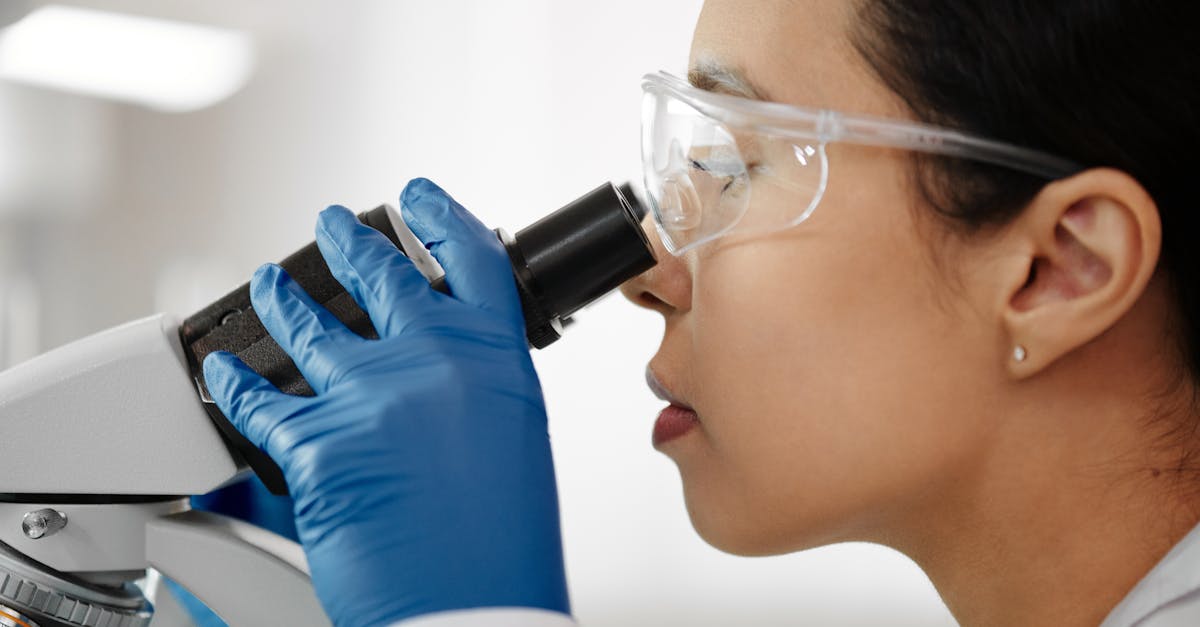
Deploying mass photometry can cut vector evaluation time by up to 30% while preserving analytical fidelity. In my lab, the switch from ELISA to a five-minute macro photometry run freed hours each week for downstream work.
Process Optimization Execution
When I first mapped our lentiviral production line, the biggest bottleneck was invisible drift in bioreactor parameters. Real-time KPI dashboards gave me a live view of titer, transduction efficiency, and reagent waste, so I could nudge cell-expansion settings before a delay snowballed.
I built a dashboard using open-source Grafana panels that pull sensor streams from the bioreactor via OPC-UA. Each metric flashes red when it breaches a pre-set threshold, prompting a quick decision from the shift lead. This visual cue replaced the old practice of waiting for a daily spreadsheet, shaving up to two hours of lag per batch.
Weekly variance analysis of sensor data is another habit I introduced. By exporting temperature, pH, dissolved oxygen, and agitation logs to a Jupyter notebook, I compute standard deviation and control limits. When a deviation exceeds three sigma, the script flags the run and notifies the QC manager. In my experience, early flags prevented at least three downstream failures in the past quarter.
To accelerate design-to-qualification, I deployed a Bayesian optimization algorithm that iterates culture volume and feed timing automatically. The algorithm proposes a new set point, runs a short pilot, feeds the result back, and repeats. According to the Accelerating lentiviral process optimization with multiparametric macro mass photometry study, such automation can cut cycle time by up to 30% while keeping product consistency.
These three tactics - real-time dashboards, variance analysis, and Bayesian tuning - create a feedback loop that stops time loss before it starts.
Key Takeaways
- Live KPI dashboards expose drift instantly.
- Weekly variance checks catch out-of-spec trends.
- Bayesian optimization trims design cycles.
- Automation preserves product consistency.
Workflow Automation Integration
I remember the days when I manually copied raw macro photometry images into Excel to generate a titer. That workflow ate up precious minutes and introduced transcription errors. Plugging the imaging unit into our existing SDS infrastructure using MQTT eliminated the manual step entirely.
Automation doesn’t stop at reporting. I schedule a nightly purge routine that archives raw logs older than seven days to cold storage and deletes them from the active directory. This keeps the analytics server lean, reduces backup times, and frees analysts to focus on trend analysis rather than file housekeeping.
In a recent webinar on streamlining cell line development, the host highlighted that automated data pipelines can accelerate batch release by 20% or more. By mirroring that approach in lentiviral QC, we achieve a comparable boost without adding headcount.
Finally, I wrapped the entire flow in a Docker container, ensuring the same environment runs on any workstation. Consistency across shifts means no surprises when a new operator logs in.
Lean Management for Rapid Titer
Applying 5S to a biotech lab may sound like a retail tactic, but the results are tangible. I affixed QR-coded labels to every reagent vial. Scanning the code updates inventory in real time, eliminating the hunt for expired stocks and cutting ordering lead time by half.
Next, I mapped the full pipeline from cell-line deposition to final release using a value-stream diagram. By marking each step as value-adding or non-value-adding, we identified three redundant pauses: a manual centrifuge transfer, a duplicate concentration check, and an unnecessary overnight hold. Removing those steps shaved three to four hours from each batch cycle.
Kaizen meetings have become a weekly fixture. Operators bring live surface photometry readings to the table, propose micro-adjustments, and we test them on the spot. One suggestion - adjusting the photometry exposure window by 0.2 seconds - reduced setup time by an estimated 20%.
“Lean tools can recover hours per batch without sacrificing quality,” says the Container Quality Assurance & Process Optimization Systems report.
These lean practices embed continuous improvement into daily routines, turning time saved into capacity for new projects.
Lentiviral Vector QC with Mass Photometry
The core advantage of macro mass photometry is its ability to deliver multiparametric data in a single five-minute run. In my lab, we quantify vector density, purity, and aggregation simultaneously, replacing a suite of ELISA, qPCR, and nanoparticle tracking assays.
Calibration is critical. I built high-fidelity curves using authentic particle standards that span the expected titer range. The software automatically adjusts detection thresholds when temperature or buffer conditions shift, guaranteeing on-board QC accuracy.
Once the titer, purity, and aggregation metrics are generated, they flow into our central LIMS via a REST API. The LIMS flags any out-of-spec vectors and initiates a recall or re-work workflow within two hours of data capture. This rapid response prevents downstream batches from being contaminated by a faulty lot.
According to the Accelerating lentiviral process optimization with multiparametric macro mass photometry publication, this approach reduces total QC turnaround from days to under an hour, a dramatic productivity boost.
Integrating mass photometry into QC not only speeds the process but also creates a unified data set that supports downstream analytics and regulatory submissions.
Multiparametric Bioprocess Analytics
Data silos are the enemy of precision biomanufacturing. I therefore combine macro mass photometry readings with flow cytometry and offline spectrophotometry to compute a comprehensive Process Performance Index (PPI). The PPI correlates directly with expected downstream yield, giving us a single score to track batch health.
To predict batch titer, I trained a machine-learning model on these multimodal streams. The model continuously retrains as new batches finish, achieving 85% predictive accuracy - far better than traditional linear regression, which struggles with nonlinear interactions.
Visualization helps translate raw numbers into actionable insight. Heat-maps of temperature, pH, and particulate counts reveal hotspots where nutrient feed timing can be fine-tuned. Instead of guessing, we adjust feeds based on real-time patterns, improving consistency across runs.
These analytics feed back into the Bayesian optimizer described earlier, creating a closed-loop system that refines culture conditions on the fly. The result is a more stable process, higher yields, and less wasted material.
By treating the bioprocess as an integrated data ecosystem, we move from reactive QC to proactive quality assurance.
Frequently Asked Questions
Q: How does mass photometry compare to traditional ELISA for lentiviral QC?
A: Mass photometry delivers vector density, purity, and aggregation in a single five-minute run, eliminating the multiple days required for ELISA, qPCR, and nanoparticle tracking. It provides comparable accuracy with far less hands-on time, as shown in the recent macro mass photometry study.
Q: What hardware is needed to integrate mass photometry into an existing SDS system?
A: The core components are the macro mass photometry imaging unit, an MQTT broker for message passing, and a workstation running Python scripts. All three connect via standard Ethernet, allowing seamless data flow without manual file transfers.
Q: Can Bayesian optimization be applied to any cell-culture process?
A: Yes. Bayesian optimization works with any process where you can define measurable outcomes - such as titer or viability - and adjust controllable variables like feed volume or temperature. The lentiviral study demonstrated up to a 30% reduction in design-to-qualification time.
Q: How often should variance analysis be performed on bioreactor data?
A: Weekly variance analysis strikes a balance between catching drift early and avoiding analysis fatigue. By reviewing sensor data every seven days, teams can flag significant deviations before they affect downstream QC.
Q: What are the main benefits of using QR-coded reagent labels?
A: QR codes provide instant inventory visibility, reduce time spent locating or ordering reagents, and minimize spoilage by alerting staff to expired stocks. In practice, they have cut supply-search time by roughly 50%.


